Academic Habits That Matter More Than IQ
When people talk about academic success, they often default to one explanation: intelligence. Some students are just “naturally good at school.” Others simply aren’t.
But if you spend enough time in classrooms, a different pattern emerges. The students who improve the most, and often achieve the most over time, aren’t always the ones with the highest raw ability. They’re the ones with the strongest habits.
While intelligence can shape how quickly a student understands something, habits determine what happens next. And in the long run, that difference compounds. Here are five academic habits that matter more than IQ.
1. The Willingness to Revise
Strong students rarely assume their first attempt is their best. They reread their work. They rethink their arguments. They make changes even when something is already “good enough.” This is especially visible in writing, where revision often separates average work from excellent work.
Weaker students, by contrast, tend to treat the first draft as the final product. Once something is done, they move on. The difference is not intelligence. It’s a belief about what learning is. Students who revise understand that quality emerges through iteration. They expect their thinking to improve over time—and they build that process into their work.
2. The Ability to Sit With Confusion
One of the clearest predictors of growth is how a student responds when they don’t understand something. Some students disengage quickly. They look for shortcuts, wait for answers, or conclude that the material is “not for them.”
Stronger students do something quieter but more powerful: they stay with the confusion. They reread the problem. They try a different approach. They ask a more specific question. They tolerate the discomfort of not knowing, at least for a while.
This habit is easy to miss because it doesn’t look impressive in the moment. But it’s essential. Learning often begins in that space of uncertainty.
3. Attention Management
In an environment full of distractions, the ability to focus has become a defining academic skill. Strong students are not necessarily more disciplined in a moral sense. But they are better at structuring their attention. They put their phone away. They work in focused blocks. They know when they are actually concentrating and when they are not.
Weaker students often underestimate how fragmented their attention is. They switch between tasks, check messages, and try to work at the same time. Over hours and days, this difference adds up. Deep focus allows for deeper understanding. Shallow attention produces shallow work.
4. Asking Better Questions
Not all questions are equal. Some students ask questions that are really requests for reassurance: Is this right? Is this what you want? Other students ask questions that push their thinking forward: Why does this method work here but not there? What would happen if we changed this assumption?
The second type of question reflects a different relationship to learning. Instead of trying to confirm correctness, the student is trying to understand more deeply. This habit often develops slowly, but it’s one of the clearest markers of intellectual growth.
5. Taking Responsibility for Learning
Perhaps the most important habit is also the simplest to describe: strong students take responsibility for their own learning. They keep track of what they understand and what they don’t. They follow up when something is unclear. They seek out help when they need it, and they use feedback to improve.
Weaker students tend to rely more heavily on external structure. They wait for reminders, depend on teachers to point out gaps, and move on even when their understanding is incomplete. The difference is not effort alone: it’s ownership.
What This Means for Students (and Adults)
These habits are not fixed traits. They can be taught, modeled, and practiced. That starts with shifting what we emphasize. If students believe that success is mostly about being “smart,” they will focus on protecting that identity. If they believe success comes from how they work, they will pay attention to their habits.
Small changes in feedback can reinforce this shift. Instead of praising outcomes—“You’re really good at this”—adults can highlight process: “You kept working even when that got confusing,” or “Your revision made this much clearer.”
Over time, those signals shape how students approach learning.
The Long Game
IQ (a problematic measure at best, but speaking broadly) may influence how quickly a student grasps a concept. But habits determine whether they return to it, deepen it, and build on it. And that’s what matters in the long run.
Because the students who succeed over time are not simply the ones who understood things first. They’re the ones who kept going.
Why Smart Kids Avoid Hard Things
Teachers and parents often notice a puzzling pattern. The student who reads years above grade level refuses to attempt the hardest math problems. The straight-A student panics when an assignment feels unfamiliar. A child who usually excels suddenly procrastinates when faced with a difficult project.
At first glance, this behavior can look like laziness or lack of resilience. But very often the opposite is true. High-achieving students sometimes avoid challenge precisely because they care so much about succeeding.
When “Smart” Becomes an Identity
From a young age, some students hear a steady stream of praise: You’re so smart. You’re the best reader in the class. You’re naturally good at this. These comments are well-intentioned, but over time they can create something powerful—an identity to protect.
If a student believes their value comes from being “the smart one,” failure starts to feel risky. A difficult assignment isn’t just a challenge; it becomes a potential threat to the identity they’ve built. Instead of approaching the task with curiosity, students may quietly avoid situations where they might struggle.
Avoidance becomes a form of self-protection.
The Perfectionism Trap
Many high-achieving students develop a version of perfectionism that can look like motivation from the outside. They care about their grades, they work carefully, and they often produce polished assignments. But perfectionism usually comes with an unspoken rule: don’t try anything you might not do well.
That rule shows up in subtle ways. Students may choose safer project topics, avoid advanced classes in unfamiliar subjects, or delay starting assignments that feel uncertain. They may also ask repeatedly for reassurance, trying to confirm they are on the “right track.”
From the outside, these students appear confident and successful. Internally, they may be managing a quiet anxiety about making mistakes.
School Can Reinforce the Pattern
Ironically, the structure of school can unintentionally reward this cautious behavior. Students quickly learn that grades often reward correct answers more than intellectual risk. Efficiency tends to be valued more than struggle, and the fastest student frequently receives the most praise.
In that environment, the safest strategy becomes obvious: focus on the things you already know you can do well. Challenge becomes optional—and sometimes risky.
Fixed Mindset vs. Learning Mindset
Psychologists often describe this pattern through the distinction between fixed and growth mindsets. Students with a fixed mindset tend to believe ability is largely stable—you either have it or you don’t. When learning feels difficult, it can send an alarming signal: Maybe I’m not actually good at this.
Avoiding challenge then becomes a way to preserve the belief that they are capable.
Students who develop a learning mindset interpret difficulty differently. Struggle becomes information rather than a verdict. But shifting toward that perspective requires consistent signals from the adults around them.
What Actually Helps
Simply telling students not to fear failure rarely works. What matters more is changing the signals students receive about learning.
One helpful shift is in how adults offer praise. When students repeatedly hear “you’re so smart,” they may begin to see intelligence as a fragile trait they must defend. Comments that highlight effort and strategy send a different message. Saying “I like how you tried two different approaches to solve that” focuses attention on the process rather than the identity.
It also helps to normalize struggle. Many students assume strong performers understand everything immediately. When teachers or parents openly acknowledge that confusion is part of learning—“This is the part most people find tricky,” or “It usually takes a few tries before this clicks”—challenge becomes less threatening.
Revision is another powerful tool. If the first attempt determines the entire grade, students quickly learn to play it safe. When revision is expected, students see learning as something that develops over time rather than something that must appear fully formed.
Finally, adults can model curiosity themselves. When a teacher says, “I’m not sure why that happens—let’s figure it out,” they demonstrate that knowledge is something people explore rather than perform.
The Real Goal
The goal of education is not to protect the identity of the “smart kid.” The goal is to help students become people who are willing to engage with difficulty.
That means trying problems they might not solve immediately, asking questions that reveal confusion, and taking intellectual risks even when the outcome is uncertain. In the long run, the students who continue growing are rarely the ones who avoided hard things.
They are the ones who eventually learned not to be afraid of them.
What Strong Writing Actually Looks Like (At Different Ages)
“Good job!” “Great essay.” “Nice work.” Students hear these comments all the time. But they rarely answer the question that matters most:
What made it good?
If we want students to improve as writers, we have to get more specific. Strong writing looks different at different ages, and when expectations are vague, students either plateau or panic.
Here’s a clearer picture of what strong writing actually looks like in elementary, middle, and high school, and what adults should be looking for.
Elementary School: Clarity and Completion
At this stage, strong writing is not about sophistication. It’s about clarity, structure, and finishing thoughts.
Strong elementary writing often includes:
A clear beginning, middle, and end
Complete sentences
Basic transitions (“First… Then… Finally…”)
Specific details instead of vague statements
Staying on topic
A strong 4th-grade paragraph doesn’t need advanced vocabulary. It needs sentences that make sense and ideas that connect.
Weak writing at this stage often sounds like:
Lists of events with no explanation
“And then… and then… and then…”
General statements without examples (“It was fun.” Why?)
Strong writing sounds like:
“The hardest part of the science project was waiting for the plant to grow. Every morning I checked the cup, but nothing changed. On the fifth day, I finally saw a tiny green line pushing through the soil.”
Notice what’s happening: specific detail, chronological clarity, and emotional insight. That’s success at this age.
Middle School: Structure and Evidence
Middle school is where writing shifts from “tell what happened” to “explain what it means.”
Strong middle school writing typically includes:
A clear thesis or main claim
Paragraphs organized around one idea
Evidence from a text (quoted or paraphrased)
Explanation of how the evidence supports the claim
Basic transitions between paragraphs
The biggest jump here is that students must learn that evidence is not explanation.
Weak middle school writing often:
Drops in quotes without analysis
Repeats the prompt instead of answering it
Makes broad claims (“This shows he is brave”) without unpacking them
Stronger writing sounds like:
“When Jonas volunteers to take Gabriel with him, it shows he values compassion over safety. Instead of protecting himself, he risks punishment to protect someone more vulnerable.”
The difference? The student doesn’t just summarize the event — they interpret it. At this age, the key skill is connecting evidence to meaning.
High School: Precision and Complexity
High school writing should move toward:
Clear, arguable thesis statements
Logical progression of ideas
Integrated evidence (not quote dumps)
Nuanced thinking (acknowledging complexity)
Strong sentence control and rhythm
Strong high school writing doesn’t just answer the question; it deepens it.
We start to see:
Counterarguments addressed
Sophisticated transitions
Specific word choice
Control of tone
Paragraphs that build toward insight
Weak high school writing often:
Sounds formulaic (“In conclusion, this shows…”)
Relies on summary
Uses big words imprecisely
Avoids complexity in favor of safe arguments
Stronger writing might sound like:
“While the narrator insists he is motivated by justice, the pattern of his actions suggests something closer to wounded pride. His obsession with being acknowledged undermines his claim to moral superiority.”
Notice the nuance. The student is analyzing tension, not just identifying a trait. That’s the shift.
What Progress Really Looks Like
Strong writing development is not about longer essays.
It’s about:
From listing → to explaining
From explaining → to analyzing
From analyzing → to questioning
A 3rd grader who writes a focused, vivid paragraph is succeeding.
An 8th grader who clearly explains how evidence supports a claim is succeeding.
An 11th grader who wrestles with ambiguity is succeeding.
Each stage builds on the last.
The Real Problem: Vague Praise
When adults say “great job,” students don’t know what to repeat.
Instead, try:
“Your example made the scene easy to picture.”
“Your thesis clearly takes a side.”
“You explained how the quote supports your claim — that’s strong analysis.”
“This paragraph builds logically from the one before it.”
Specific feedback teaches students what strong writing is.
And once they can see it, they can aim for it.
Productive Homework Routines by Age
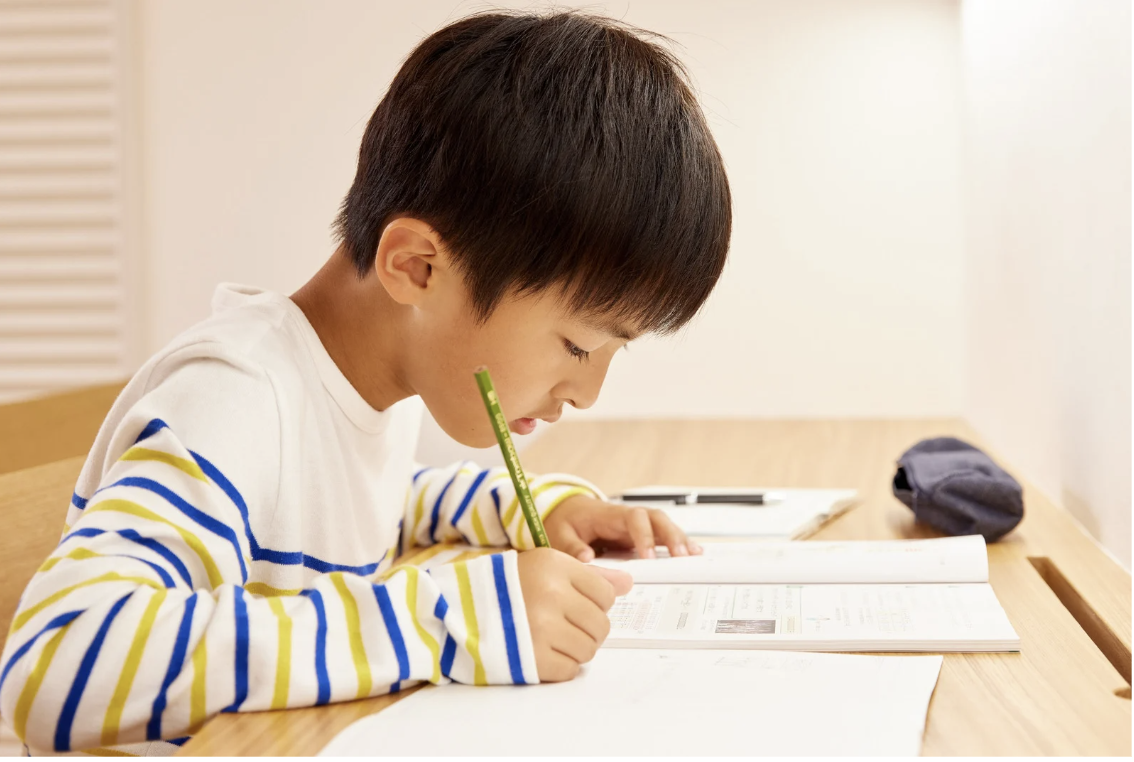
Homework is one of the most consistent sources of tension in education.
Parents worry it’s too much—or not enough. Teachers wonder whether it’s reinforcing learning or creating stress. Students often feel caught in the middle, unsure how long it should take or what “done well” even means.
The problem isn’t usually homework itself. It’s the absence of a clear, age-appropriate routine. A productive homework routine doesn’t look the same at every stage of development. What works for a third grader will frustrate a seventh grader. What supports a high school student may overwhelm a younger child.
The key is alignment: matching expectations to developmental readiness.
Early Elementary (K–2): Building Habits, Not Independence
At this age, homework should be short, predictable, and heavily supported. We’re aiming to begin to build skills that will come into action later in a child’s learning journey.
Young children are still learning how to:
Sit and focus for sustained periods
Follow multi-step directions
Manage materials independently
So a productive routine might look like:
A consistent time each day (before dinner or after a snack)
A quiet, supervised workspace
A parent nearby for guidance and encouragement
Work sessions of 10–20 minutes
The goal here isn’t autonomy. It’s building positive associations with responsibility. When homework ends with encouragement rather than exhaustion, children internalize that effort is manageable.
Upper Elementary (Grades 3–5): Shared Responsibility
By this stage, students can begin taking partial ownership of their routine—but still need structure.
A productive routine includes:
A consistent start time
A visible checklist or planner
Short breaks between tasks
Gradual reduction of direct supervision
Parents shift from sitting beside their child to checking in periodically. Teachers can support this transition by explicitly teaching how to use planners, break down assignments, and estimate time.
The focus is scaffolding. Students are practicing independence, not mastering it.
Middle School: Systems Over Supervision
Middle school is often where homework conflict peaks. Academic demands increase just as executive function skills are still developing.
A productive routine now depends less on parental presence and more on systems:
A designated workspace free from digital distraction
A written plan for what to complete first
Time blocks (e.g., 25–30 minutes) with short breaks
A clear “done for the night” endpoint
Parents shift into a coaching role: asking questions rather than directing tasks. Teachers can reinforce this by being transparent about timelines and expectations.
At this age, routine protects students from overwhelm.
High School: Ownership and Adjustment
High school students need flexibility, not micromanagement. Their schedules vary; assignments differ in intensity.
A productive routine may look like:
Reviewing assignments daily and prioritizing
Planning larger projects across multiple days
Studying in advance of tests rather than cramming
Adjusting workload around extracurricular commitments
At this stage, adults should ideally step back, but not away. Check-ins become conversations about workload management, stress, and strategy—not whether homework was completed.
The goal is self-regulation. Students are preparing for environments where no one monitors them daily.
What Productive Routines Have in Common
Across all ages, effective homework routines share core elements:
Consistency – A predictable time and place reduce resistance.
Clarity – Students know what “finished” looks like.
Boundaries – Clear start and end points prevent endless evenings.
Support matched to age – Neither over-helping nor abandoning.
Homework becomes productive when it reinforces learning without dominating family life.
Learning How to Learn: Metacognition

We believe strongly that not enough attention is paid to how students learn, or what is known as metacognition.
The students who thrive over time aren’t always the ones who grasp material the fastest. They’re the ones who understand their own learning process: how they focus, how they practice, how they recover when something doesn’t make sense.
This ability—learning how to learn—is one of the most powerful and least explicitly taught skills in education.
What “Learning How to Learn” Actually Means
Learning how to learn isn’t about studying longer or working harder. It’s about developing awareness and strategies that make learning more efficient and less frustrating.
At its core, it includes:
Noticing when you understand something—and when you don’t
Knowing which strategies help you remember and apply information
Adjusting your approach when one method isn’t working
Students who develop these skills stop seeing learning as something that happens to them and start seeing it as something they can actively manage.
Why This Skill Often Gets Overlooked
Schools are built around content and coverage. There’s pressure to move through material quickly, assess performance, and prepare students for the next benchmark.
As a result, learning strategies are often assumed rather than taught. Students who intuitively figure them out appear “naturally good” at school, while others struggle silently, unsure what they’re doing wrong.
Without explicit guidance, many students conclude that difficulty means they lack ability—when it often just means they haven’t been taught how to approach the work.
What Learning-Aware Students Do Differently
Students who know how they learn tend to:
Check their understanding instead of assuming it
Use mistakes as information, not proof of failure
Choose study strategies intentionally rather than by habit
Adjust their effort based on feedback and results
These behaviors don’t require extraordinary intelligence. They require reflection, practice, and support from adults who make the learning process visible.
How Parents and Teachers Can Teach “How to Learn”
You don’t need a separate class to build this skill. Small shifts in language and routine make a difference.
Ask process-focused questions: “What strategy did you use?” or “What will you try next time?”
Model thinking aloud when solving problems or revising work
Normalize confusion as part of learning, not a sign of weakness
Encourage reflection after assessments or projects
When adults talk openly about learning strategies, students learn to do the same internally.
What Students Can Practice Right Now
Students don’t need to wait for permission to become better learners. Simple habits build awareness over time.
After studying, ask: What do I actually understand?
Before asking for help, identify where confusion starts
Try different approaches—writing, explaining aloud, teaching someone else
Notice which strategies lead to progress, not just completion
These small moments of reflection compound into stronger independence and confidence.
The Long-Term Impact
Content changes. Subjects get harder. Expectations increase. Students who rely only on memorization or speed eventually hit limits.
Students who know how to learn, however, carry their skills forward. They adapt to new teachers, new subjects, and new challenges because they understand their own learning process. In that sense, learning how to learn isn’t just an academic skill—it’s preparation for lifelong learning.
A Shift Worth Making
When education focuses only on outcomes, students learn to chase grades. When it focuses on process, students learn to build capacity. Helping students learn how to learn doesn’t lower standards. It raises them—by giving every student access to the tools that successful learners use.
The Skills School Doesn’t Always Teach—But Everyone Needs

When people evaluate someone’s level of education, they usually consider content: reading levels, math skills, science concepts, historical facts. Those things matter—but they aren’t what most often determine whether students succeed.
Across classrooms, households, and grade levels, the biggest obstacles students face are not gaps in knowledge, but gaps in skills school rarely names explicitly. These are the skills that shape how students manage their time, handle frustration, ask for help, and persist when learning gets hard. They’re not always on the syllabus—but they show up everywhere.
1. How to Manage Attention
Students are rarely taught how to focus—only when they’re expected to. Attention is treated as a prerequisite for learning, rather than a skill that develops gradually and unevenly.
Managing attention means learning how to start a task, stay with it despite distractions, and notice when focus is fading. Students who struggle here often internalize the idea that they are “bad at school,” even though what they actually lack is guidance in managing mental energy.
2. How to Struggle Productively
School often rewards correctness, which can unintentionally teach students to avoid mistakes. Over time, many students come to believe that confusion is a sign they don’t belong in a subject.
Productive struggle looks different. It involves sitting with uncertainty, trying multiple approaches, and revising work without immediate reassurance. Students who learn this skill are better equipped to handle challenging material later, when answers aren’t obvious and persistence matters more than speed.
3. How to Organize Work and Time
Schools place heavy organizational demands on students—planners, folders, deadlines, digital platforms—yet rarely teach students how to manage them effectively. Organization is often mistaken for a personality trait rather than a learned process.
Being organized means knowing how to break large tasks into manageable steps, estimate how long work will take, and keep track of responsibilities over time. Without these skills, students may appear careless or unmotivated when they are actually overwhelmed.
4. How to Ask for Help
Many students don’t know how to ask for help in ways that actually move learning forward. Some hesitate out of fear of embarrassment, while others ask immediately because they haven’t learned how to attempt a problem independently first.
Learning to ask for help includes identifying what’s confusing, explaining where understanding breaks down, and choosing the right moment and person to ask. When students develop this skill, they become more confident learners—and less dependent on constant adult intervention.
5. How to Handle Feedback
Feedback is intended to support growth, but students often experience it as criticism of who they are rather than guidance on what to improve. This is especially true for students who tie their self-worth closely to performance.
Handling feedback well means learning to separate identity from work, to view revision as part of the process, and to try again without defensiveness. Students who develop this skill are more willing to take risks—and more resilient when things don’t go as planned.
Why These Skills Often Go Untaught
These abilities fall into a gray area. They’re assumed rather than instructed, develop unevenly across students, and are harder to assess than academic content. As a result, students who already possess them are labeled “motivated” or “strong,” while others are labeled “careless” or “unprepared,” even when intelligence and potential are the same.
Supporting these skills doesn’t require a new curriculum—just more intention. When adults name the skill behind a task, students begin to see learning as something they can actively manage. Modeling strategies, normalizing mistakes, and praising effort and process all make these skills visible. Over time, repeated language and shared expectations across home and school help students internalize them.
Why This Matters
If school feels harder than it “should,” it doesn’t mean you’re bad at learning. It often means no one has explained the systems and strategies that successful students quietly rely on.
Attention, organization, persistence, and self-advocacy are not personality traits. They are skills—and skills can be practiced, strengthened, and improved.
In the end, academic knowledge opens doors, but these hidden skills determine whether students can walk through them. When parents, teachers, and students focus not just on what is being learned, but on how learning works, education becomes less about proving ability and more about building it.
Coming Back: Re-Engaging Students After a Break

Whether it’s winter break, spring vacation, or a long holiday weekend, many parents and teachers notice the same pattern when school resumes: students struggle to settle back in. Focus feels fragile. Routines wobble. Motivation lags behind expectations.
This reaction isn’t a sign that something went wrong during the break. It’s a normal re-entry process, and it can happen after any meaningful pause from structured learning. Understanding how students transition back—and how adults can support that transition—can make returns from holidays smoother and more productive.
Why Returning After a Break Feels Difficult
Long breaks change more than schedules. They shift how students use their attention, energy, and emotions.
Common factors include:
Disrupted routines: Sleep, eating, movement, and study patterns all shift during holidays.
Reduced cognitive load: Breaks lower the demand on sustained focus and self-regulation.
Emotional contrast: Holidays often involve novelty, flexibility, and family time; school requires structure and delayed rewards.
Developmental limits: Younger students especially have difficulty switching quickly between modes of life.
Re-engagement takes time because students are shifting between worlds, not just returning to a building.
What Makes Re-Entry Harder Than It Needs to Be
Adults often assume that because students were capable before the break, they should be capable immediately after it. That assumption leads to expecting instant focus and productivity, treating distraction as misbehavior rather than transition, pushing new or complex material too quickly, or framing the return as something to “power through.” Together these responses often increase stress without speeding up adjustment.
What Helps Students Re-Engage at School
1. Re-establish routines explicitly
Students benefit from seeing expectations modeled again—how to start work, how to participate, how to manage materials.
2. Prioritize familiarity before novelty
Reviewing known content or skills helps students regain confidence before tackling new challenges.
3. Offer more structure at first
Clear directions, shorter tasks, and predictable lesson flow reduce the mental effort of getting back on track.
4. Emphasize belonging and purpose
Students re-engage faster when they feel connected—to the classroom community and to the reason learning matters.
How Parents Can Support Re-Entry at Home\
Re-entry is not about lowering standards. It’s about supporting the process of getting ready to meet them again.
1. Treat the transition as normal
Let children know that feeling unsettled after a break is expected—and temporary.
2. Rebuild rhythms gradually
Sleep, homework time, and morning routines often need a few days to reset.
3. Focus on consistency, not perfection
Showing up matters more than peak performance in the first stretch back.
4. Break work into manageable steps
Large tasks feel heavier right after a break; smaller steps restore momentum.
Looking Ahead
Students don’t lose their abilities during holidays—but they do lose the habits that make those abilities easy to use. When parents and teachers treat the return from breaks as a transition period, not a test of discipline, students regain focus and confidence more quickly—and learning resumes with less friction for everyone.
The Parent–Student Partnership
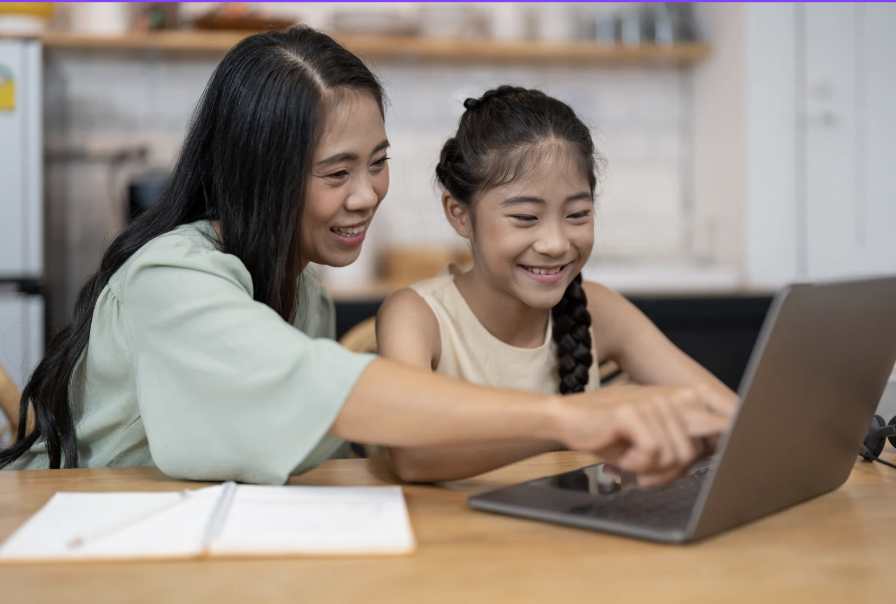
One of the most powerful influences on a child’s success in school is the relationship between parents and students at home. But finding the right balance can be tricky. Parents want to help—but too much involvement can lead to stress, dependency, or conflict. The goal isn’t to manage every assignment; it’s to build a partnership that empowers students to take ownership of their learning while knowing their family is there to support them.
Create an Environment That Makes Learning Possible
Start with the basics: a well-lit study space, a predictable routine, and access to necessary materials. These simple conditions remove barriers and create a natural structure for schoolwork. Parents don’t need to hover—just maintaining a calm, prepared environment communicates that learning is a priority in the household.
Ask Questions, Don’t Provide Answers
When students get stuck, it’s tempting to step in with solutions. But learning sticks best when kids wrestle with ideas themselves. Instead of offering answers, ask guiding questions: “What have you tried so far?” “Where in your notes might this be explained?” “What do you think the first step could be?”
This approach builds problem-solving skills and resilience—traits that matter far beyond the classroom.
Focus on Process, Not Perfection
Children thrive when they feel safe to make mistakes. Rather than emphasizing perfect grades, celebrate effort, growth, and improvement. Comments like “I noticed how long you stayed focused today” or “You didn’t give up even when it was frustrating” reinforce healthy learning habits. Process-focused praise encourages intrinsic motivation instead of fear of failure.
Stay Connected With Teachers—As a Supporter, Not a Substitute
Strong communication with teachers can help parents understand expectations, upcoming assessments, and areas where their child might need help. But the purpose of this communication is partnership, not micromanagement. Let teachers guide the academic plan while you reinforce it at home.
Encourage Independence and Ownership
As students get older, gradually shift responsibility to them: managing their own planner, setting study goals, or emailing their teacher with questions. Parents stay in the role of coach rather than manager. The message becomes: “I’m here if you need me, but I trust you to lead your learning.”
The Bottom Line
A healthy parent–student partnership is built on support, trust, and shared responsibility. When parents guide rather than control, students build confidence, independence, and the lifelong skills they need to thrive academically—and beyond the classroom.
Executive Function Skills Every Student Needs

If you’ve ever watched a student stare at a blank planner trying to remember their homework, forget an assignment that was finished but never turned in, or melt down over a long-term project, you’ve witnessed executive function skills — or rather, a lack of them. These mental processes—planning, organization, time management, impulse control, and flexible thinking—are the brain’s “air traffic control system.” They help students manage tasks, regulate emotions, and adapt when things don’t go as expected. While some lucky children seem to develop these skills naturally, most need explicit support from the adults in their lives. The good news: executive function skills can be taught, modeled, and strengthened over time.
1. Planning and Task Initiation
Students often struggle not because they lack ability, but because they don’t know how to start. Breaking big assignments into smaller steps is a powerful intervention. Parents can guide children to list out each component of a project and estimate how long each part might take. Teachers can offer graphic organizers or sample timelines. Even a simple daily “top three tasks” list helps students prioritize and practice structuring their time.
2. Organization
Messy backpacks and scattered papers are more than a nuisance—they’re signs of a skill still developing. Adults can help by creating consistent systems: one folder per class, a color-coded binder, or a single place at home where school materials always live. Regular “reset” routines, such as a Friday backpack clean-out, prevent chaos from building up. For younger students, visual labels and checklists work wonders.
3. Time Management
Students often underestimate how long work will take, leading to stress, rushed assignments, or late-night homework battles. Timers can be transformative. Using a simple 10–15-minute countdown encourages focus while giving students a realistic sense of time. Parents might help students map homework into blocks; teachers can model backward planning for due dates. Over time, students learn to pace themselves and reduce procrastination.
4. Self-Monitoring and Emotional Regulation
The self-awareness to understand how they’re doing—academically and emotionally—is key to student growth. Adults can model “thinking aloud,” showing the self-check process. Phrases like “Let me reread that to make sure it makes sense” or “I’m feeling frustrated, so I’m going to take a quick break” help students internalize these strategies. Teaching calm-down techniques (deep breathing, stretching, or taking a brief walk) gives students tools to use independently.
5. Cognitive Flexibility
Schedules change, instructions shift, and sometimes the plan just doesn’t work. Students who can adapt handle school—and life—more smoothly. Encouraging kids to brainstorm multiple solutions to a problem or reflect on what they might try next time builds flexible thinking. Teachers can normalize mistakes as part of the learning process.
Ultimately, strengthening executive function isn’t about making students perfectly organized or rigidly structured. It’s about giving them the tools to manage their responsibilities with increasing independence. With steady support, patience, and consistent routines, students can grow these essential skills—and feel more confident in the classroom and beyond.
Digital Literacy and Online Safety

In today’s world, technology is as much a part of a child’s education as pencils and paper once were. From virtual classrooms to online research and social media, students are constantly connected. While the internet offers incredible opportunities to learn and create, it also presents real challenges—like misinformation, privacy concerns, and digital distractions. That’s where digital literacy and online safety come in.
Understanding Digital Literacy
Digital literacy goes beyond knowing how to use a tablet or laptop. It’s about understanding how to think critically online—recognizing credible sources, evaluating information, and engaging respectfully on digital platforms. When students develop strong digital literacy skills, they become smarter researchers and more responsible digital citizens. Parents can encourage this by exploring websites together, discussing how to verify information, and talking about what makes a source trustworthy.
Finding Reliable Sources and Understanding Bias
The internet is full of information—but not all of it is accurate or objective. Teaching students to evaluate sources is a vital life skill. Encourage them to ask key questions:
Who created this content?
What is the purpose—to inform, entertain, or persuade?
Is the information supported by evidence or expert opinion?
Comparing multiple sources can help identify bias or one-sided perspectives. Parents can also introduce students to reliable research tools like Google Scholar, Newsela, or reputable news organizations. For older students, discussions about bias—both in media and in algorithms—can spark valuable awareness about how digital platforms shape what we see online.
Teaching Online Safety
Online safety begins with awareness. Students should know the basics of protecting their personal information: never sharing passwords, avoiding clicking on suspicious links, and being cautious about what they post. Even simple lessons—like setting strong passwords or turning on privacy settings—can make a huge difference. Parents can also model good behavior by using privacy tools themselves and talking openly about why these steps matter.
Balancing Screen Time and Well-Being
Digital literacy isn’t only about being online—it’s also about knowing when to step away. Encourage “tech-free” times for meals, family conversations, and bedtime. Tools like screen-time trackers can help students (and parents) see where their time goes and adjust habits if necessary. Balance builds healthier relationships with technology and supports better focus during schoolwork.
Empowering Responsible Digital Citizens
Ultimately, the goal is to help students see themselves as part of an online community where actions matter. Encourage kindness in digital spaces, remind students that what’s shared online is often permanent, and talk about the power of using technology for good—like learning new skills or supporting causes they care about.
Takeaway for Families
Digital literacy isn’t just a skill; it’s a lifelong habit. By guiding children to think critically, act safely, and balance screen use, parents can empower them to navigate the digital world with confidence, curiosity, and care.